Doomscrolling - Caught Up in the Feed
How many of you have come across the “Are you still scrolling?” woman on TikTok? You know, the soothing voice that suddenly pops up on your feed to gently remind you that you've been on the app for a while and maybe it's time to put your phone down. Yeah. Same. Guilty as charged.
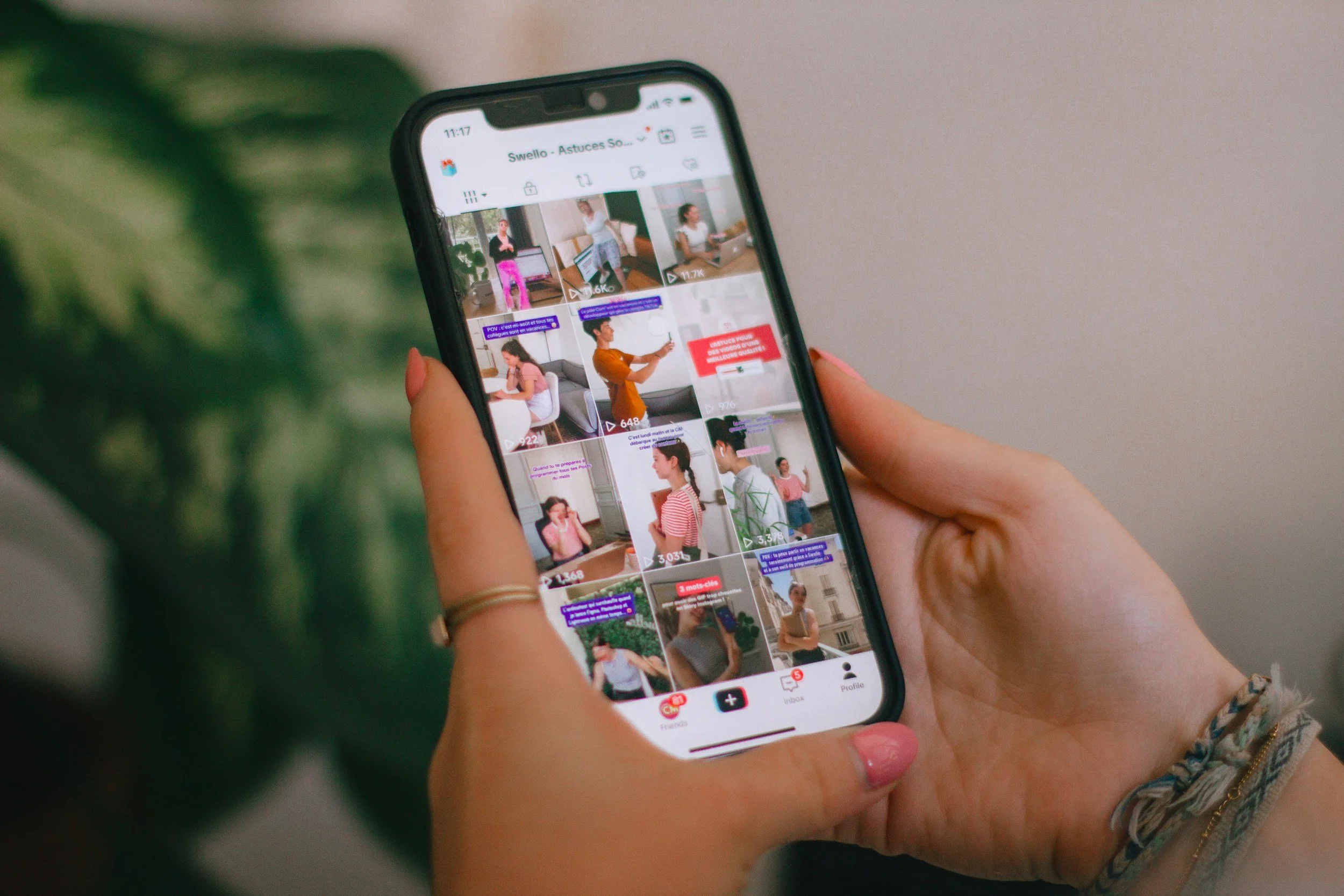
Image credit: Unsplash.com Swello
TikTok easily became one of my go-to apps right before the pandemic, and honestly, I haven't really stopped using it since. Part of its appeal was that it felt different from the other social media platforms I had grown tired of. TikTok felt fresher. It was funny, weird, informative and unpredictable. You could stumble across someone making dinner in their kitchen, discover a new cool song, learn about something happening halfway around the world or spend ten minutes laughing at something completely ridiculous.
And there’s actually a word for what can happen when all that scrolling starts feeling like a dark cloud. Merriam-Webster defines doomscroll as “to spend excessive time online scrolling through news or other content that makes one feel sad, anxious, angry, etc.” That definition feels especially relevant now because doomscrolling isn’t necessarily limited to endlessly reading bad news. It can also look like consuming fear-based content, political propaganda, upsetting videos, repetitive commentary and algorithmically amplified stories long after the experience has stopped being informative or enjoyable.
For a long time, I loved TikTok because there was always something new to discover. There were content creators with fresh perspectives from different parts of the world, funny videos, tutorials, fashion, music, news, art and wonderfully weird little corners of the internet. But over the past several months, something has started to feel different. I began noticing that I was seeing a lot of the same stories, the same videos and the same ideas. At first I thought TikTok must be going through some major algorithm change. Then I started noticing more AI-generated content, followed by creators copying other creators' viral videos, sometimes almost exactly with the same premise, the same hook, the same delivery verbatim.
The whole culture of copying viral content is another topic all by itself, but once I started paying closer attention to what was coming through my feed, I realized that scrolling simply didn’t feel fresh anymore. There seemed to be less authenticity and more regurgitation, not only from creators reproducing whatever happened to go viral that week, but from accounts recycling misinformation, propaganda and what I would categorize as rage bait. (content intentionally designed to make us angry, afraid or emotionally activated enough to keep watching, commenting and sharing.) Ironically, the very things that made me drift away from Facebook and Instagram were beginning to show up on TikTok too.
Part of what makes this complicated for me is that I genuinely care about what is happening in the world. I have valued social media because it allows me to put my finger on the pulse of stories that traditional media does not always cover. I live in Delaware, a small state without its own major local television market. Because of our proximity to Philadelphia, much of the television news we receive comes through Philadelphia stations. Major Delaware stories may make the broadcast, but the everyday things happening within our communities do not necessarily receive much airtime. Social media has helped fill some of that gap for me. I have found local creators and community accounts that know what is happening, and I have learned about stories affecting people in other communities and even other parts of the world that may never become a segment on the evening news. There is enormous value in that, which is why walking away from the feed is not as simple as declaring social media terrible and deleting every app. I don’t believe that.
When I open TikTok, I usually start by allowing the algorithm to carry me downstream. It might show me something funny, followed by a heartwarming story, cool new fashion trend, new indie music, etc. That unpredictability was part of what originally made the experience so appealing. But lately, I have noticed that somewhere along the stream something changes. What starts as edutainment gradually becomes outrage, then disgust, then anger and sometimes even fear.
At some point I had to acknowledge that I shouldn’t give away my time to that. I don’t want a few scrolls that began with me looking for entertainment to end with me feeling worse about humanity (or even myself!) I don’t want an algorithm deciding that because I watched one upsetting story, I must want eleven more. I don’t want staying informed to mean remaining perpetually angry, and I certainly don’t want my phone determining the emotional temperature of my day.
That is when I started thinking differently about the time I was spending on social media. Maybe it is not simply reading one terrible news story after another. Maybe it is also what happens when we enter a digital environment that continuously feeds us whatever is most likely to provoke a reaction and we remain there long after we are no longer enjoying ourselves.
Research increasingly suggests that behavior comes with a cost. A 2026 systematic review and meta-analysis examining 44 studies found doomscrolling was associated with anxiety, depression, psychological distress, lower psychological well-being and lower life satisfaction (Li & Yin, 2026). Much of the existing research is cross-sectional, so researchers cannot simply say doomscrolling causes those outcomes, but the relationship is significant enough to pay attention to. For women, that conversation deserves particular attention. Women may enter these feeds while already carrying information from seemingly every direction such as family, work, caregiving, health, friendships, politics, community responsibilities, etc. A 2026 study focusing specifically on women ages 20 to 59 found relationships between doomscrolling, stress and emotional distress. Researchers also found that doomscrolling and stress predicted anhedonia, the inability to experience joy or pleasure. (Cleveland Clinic) That is something worth thinking about. We may reach for our phones looking for a little entertainment or escape and potentially walk away feeling less capable of enjoying the world around us.
Maybe We’re Ready for Something Different
At the same time that more of us are talking about digital fatigue, something else seems to be happening. People are returning to screen-free hobbies like coloring, painting, journaling, and other activities that require us to slow down and use our hands. There is even an “analog bag” trend in which people intentionally carry books, sketchpads, crafts or other screen-free activities so they have something to reach for besides their phones.
We cannot say people are rediscovering these hobbies specifically because of doomscrolling, but I find the timing interesting. A 2024 study involving 7,182 adults found that participation in arts and crafts was associated with greater happiness, life satisfaction and a stronger sense that life was worthwhile (Keyes et al., 2024). A coloring book is not going to solve the world’s problems, and crochet is not therapy, but maybe everything we do for ourselves does not have to carry that kind of weight. Sometimes it can simply make us feel good. When I am coloring, painting, taking photographs or doing something creative, I am participating in the experience rather than endlessly consuming someone else's. There is something refreshing about doing something that does not need likes, comments, views or an algorithm to tell us whether it was worth our time.
That may be the part of this conversation that interests me most. Maybe we are not simply craving less technology. Maybe we are missing authenticity, participation and experiences that do not feel optimized for engagement. After years of being told what to watch next, what to buy next, what to be angry about next and which viral trend deserves our attention, there is something wonderfully ordinary about making something simply because we enjoy making it.
Setting Boundaries for Our Attention
I am not planning to disappear from social media, and I am certainly not suggesting anyone else needs to. Technology is part of my work and my life, and social media still introduces me to ideas, people and information I value. The goal for me is not a complete digital detox. It is becoming more intentional about what I allow into my head.
Image credit: Unsplash.com Ava Sol
Sometimes that means recognizing when I am no longer learning anything and putting the phone down. It might mean turning off unnecessary notifications, muting accounts that consistently leave me feeling anxious, choosing when I want to check the news instead of allowing alerts to make that decision for me or simply stopping for a moment before opening an app and asking myself, What am I actually looking for right now? Am I looking for information, entertainment or connection, or am I opening the app because my thumb already knows exactly where to go?
It also means giving myself something else to reach for. Keep the coloring book nearby. Pick up the camera. Read the book. Make something, even if it is terrible. Not everything we create needs to become content, and not every quiet moment needs to be filled by a feed.
Most importantly, we have to become comfortable with missing things. We will miss a viral video, a breaking story, a celebrity scandal or an online argument, and the world will continue without us. There will always be another headline, another creator, another controversy and another piece of content waiting to compete for our attention.
Our attention has become incredibly valuable. Social media platforms want it, advertisers want it, creators want it, news organizations want it and algorithms are designed to hold onto it. Rage baiters have learned that fear and anger are particularly effective ways to capture it.
But our attention still belongs to us.
We can care deeply about the world without allowing the entire world into our heads every waking moment. Protecting our peace does not mean we are uninformed, uncaring or disconnected. Sometimes it simply means recognizing when information has stopped being useful and has started becoming harmful.
Maybe rebellion in the age of infinite scrolling is not deleting every app and disappearing into the woods. Maybe it is deciding when we want to be informed instead of allowing an algorithm to decide when we should be alarmed. Maybe it is allowing ourselves to miss something, put down the phone and give our attention back to the people, places and things right in front of us.